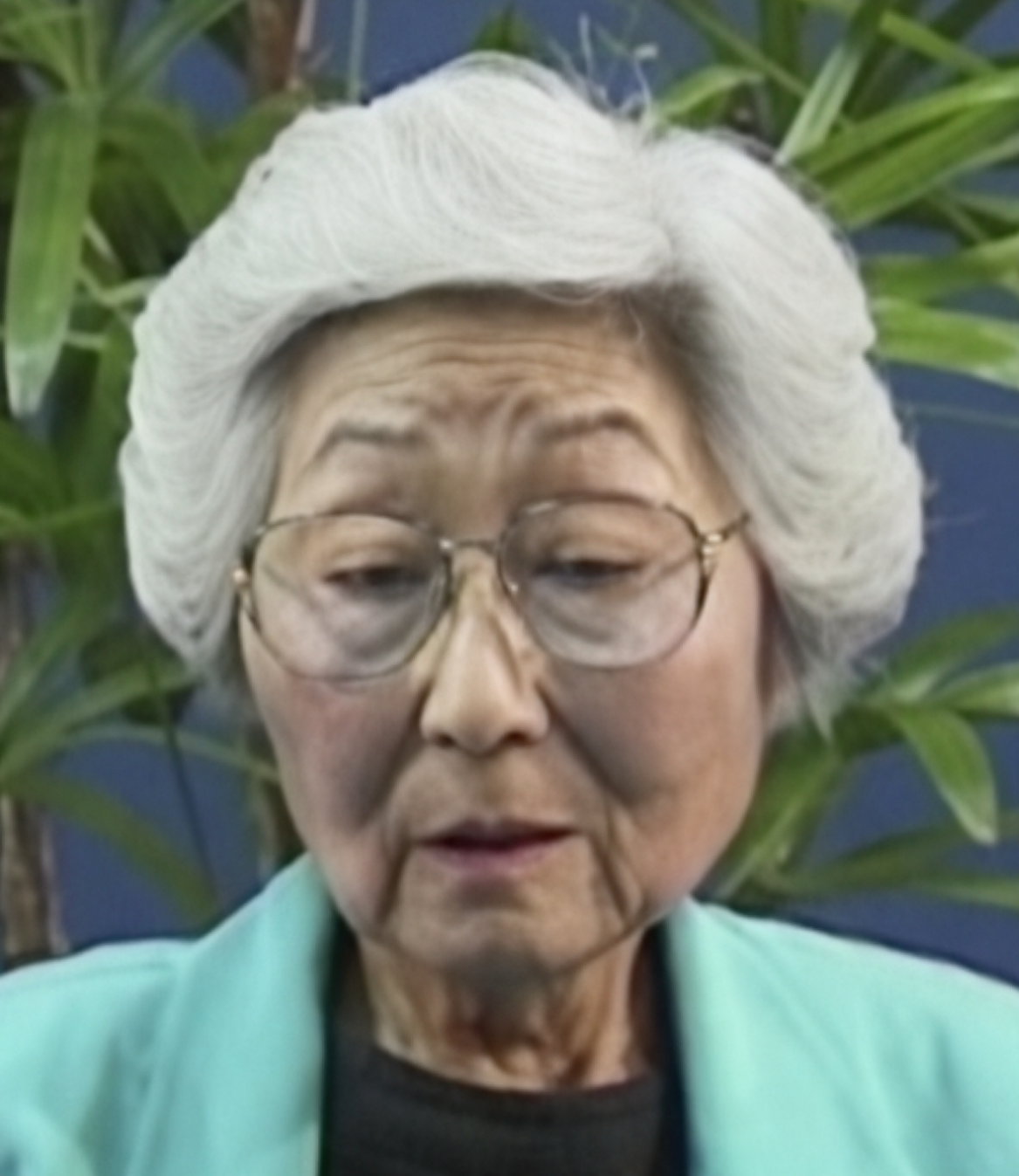
A life remembered
Susan Ahn grew up in the household of Korean independence leader Ahn Chang Ho, known as Dosan, while becoming fully at home in the United States. She remembered a strong mother who held the family together after her father left for China, a Los Angeles childhood filled with Korean community obligations, church, poverty, athletics, and the expectation that the children should be good Americans without forgetting where they came from. Her testimony gives equal weight to Dosan's public cause and the household discipline that formed his American-born children.
Her later life extended that inheritance into new public forms. Susan attended college with help from friends and New Deal work programs, joined the Navy during World War II, became the first woman gunnery officer, worked in naval intelligence after delayed clearance, and later built a civilian career at the National Security Agency. She returned to Los Angeles to help with the family's Moon Gate restaurant, raised accomplished children, and looked back with striking confidence. The result is not a conventional military life story alone, but a study of confidence built from poverty, patriotism, sport, public service, and family obligation.
Based on interviews held by the USC Digital Library.
1910s-1920s
A Patriot Household Without a Father at Home
Susan Ahn described family life after her father left in 1919 as steadier than outsiders might imagine. Her mother was strong, practical, and, in Susan's words, as patriotic in her support as her husband was in public action. Because the household accepted that Dosan belonged to Korea's cause as much as to his children, his absences did not become a daily grievance.
The Korean organizations around the family tried to help, though Susan remembered tension between older Confucian habits and American-born children. At home, her father's lessons endured: be honest, serve the community, be a good American, and do not forget Korean heritage.
A local grocer, Joseph Hill, became part of the family's survival. During periods with no income, he allowed the family to take food on credit for months and celebrated when they paid the bill. His daughter Ruth became Susan's school friend, showing that kindness could cross ethnic lines.
That household arrangement demanded maturity from the children. They learned to understand absence as service, not abandonment, and to see their mother's endurance as part of the same patriotic work that made their father famous. Susan's account shifts attention from the public male leader to the domestic labor that made his public life possible. Her mother's silence about complaint was not passivity. In Susan's telling, it was a disciplined form of leadership, making it possible for children to grow without being crushed by the burden of their father's absence. It also taught Susan to recognize women's endurance as political work. It made duty visible at home.
Youth
School, Athletics, and Los Angeles Community
Susan remembered grammar school and junior high as generally pleasant. The first pumpkin pie at Thanksgiving impressed her because it was unfamiliar, and athletics gave her confidence in a school world filled with Chinese, Japanese, Yugoslav, and other minority classmates.
Her family lived in early Korean Los Angeles spaces, including 106 North Figueroa and later a house near USC on West 37th Street. The homes received visitors, supported small business, and stood inside the shifting geography of Korean settlement from Bunker Hill toward the Adams and USC areas.
Poverty was real. The family ate what her mother could make, including greens gathered from the garden and dumplings when there was little food. Philip, the oldest brother, became a respected head of household, while Susan's tomboy independence sometimes tested older expectations of femininity.
Athletics mattered because it gave Susan an identity not defined only by poverty or ethnicity. In schoolyards and gymnasiums she could compete, belong, and be valued for skill. That confidence helps explain her later ease in military and government settings where she was often the first or only Korean American woman in the room. The family's houses also functioned as training grounds. Roofs, rented rooms, cleaning work, Korean visitors, and USC-area students all made the children comfortable with motion, strangers, and responsibility from an early age. Those spaces made public life feel familiar rather than intimidating. They also taught adaptability. This steadiness shaped her later public confidence.
1925-1938
Dosan Returns, Arrest, and Death
When Dosan returned home in 1925, Susan accepted his presence with the same calm with which she accepted his departures. She remembered his public speeches in crowded halls more vividly than ordinary domestic intimacy. The children sat in balconies while he spoke with intense emotion about Korea's independence.
He left again in 1926 because Korea was still not free. Susan did not recall a dramatic farewell. The family's understanding was that he was, in a sense, the country's father, which shaped the children's emotional life with both love and distance.
News of his 1932 arrest in Shanghai and later his death in 1938 reached a family already trained to endure. Dosan's prison letters to his wife mattered because they expressed affection and respect he had rarely had time to show in ordinary life.
Her memories of Dosan are striking for their honesty. She admired him, but she did not pretend to have had a conventional father-daughter intimacy. By describing him as the country's father, she captured both pride and loss. The phrase honors the scale of his mission while acknowledging the emotional distance it created inside the family. The prison letters complicate the public image of Dosan by revealing tenderness through formality. Addressing his wife by name and signing as a partner gave Susan evidence that respect and affection had survived inside a marriage shaped by sacrifice. The letters preserved intimacy where ordinary family life had been interrupted. They gave the children proof of feeling.
Postwar
Intelligence Work, Marriage, and Coming Home
Susan married Francis Reginald Cuddy, whom she met through overlapping wartime intelligence circles. He had encountered Koreans in Hawaii and became interested in Korean people before their relationship deepened. Their marriage was part of Susan's broader life in Washington, D.C.
At the National Security Agency, Susan described her career as successful and respected. She advanced through promotions, eventually becoming chief of a large unit. She emphasized competence, responsibility, and the satisfaction of doing demanding work well.
In 1956 she returned to Los Angeles for a year of study at USC while her husband was overseas. In 1959, her brother called and asked her to come home to help with the Moon Gate restaurant. Exhausted and responsible for two children, she accepted the call and rejoined the family enterprise.
Returning to the family restaurant did not erase her public accomplishments. It was another expression of obligation, one familiar from her childhood. The same person who could rise in national security work could also answer a brother's call when the family business needed help, carrying professional discipline back into a Korean American household economy. The Moon Gate period also places Korean American family business beside federal service, rather than below it. Susan's life moved between classified institutions and restaurant work because both belonged to the survival and advancement of her family. That movement between worlds became one of the signatures of her adulthood. It also kept family loyalty active.
Family
Children, Heritage, and Confidence
Susan raised two children, Christine and Philip, whose opportunities differed sharply from her own childhood poverty. Christine became highly educated and an entertainment lawyer; Philip's life centered on athletic travel and adventure. Susan saw in their lives the advantages of growing up with parents present and school opportunities.
Asked about growing up with Korean heritage in the United States, Susan resisted the language of disadvantage. She acknowledged that people might think her unusual, but she said she liked being in America and had never felt burdened by being born there.
Candor and steadiness run through Susan's account. She could speak of poverty, racism, father absence, military barriers, and family duty without turning them into a story of injury alone. Her inherited patriotism became public competence, humor, athletic courage, and a durable belief in her own place in American life.
Susan's confidence is most persuasive because it is not naive. She knew exclusion, poverty, surveillance rules, and the cost of her father's cause, yet she refused to organize her identity around injury. Her memories describe Korean American belonging through service, athletic courage, humor, and a clear-eyed acceptance of complicated inheritance. Her children and grandchildren gave that confidence a future. When a grandson connected her public parade presence to Dosan, it showed that the family's independence memory had not disappeared; it had been translated into another American generation's language. In that translation, memory became inheritance rather than burden. That inheritance remained alive.