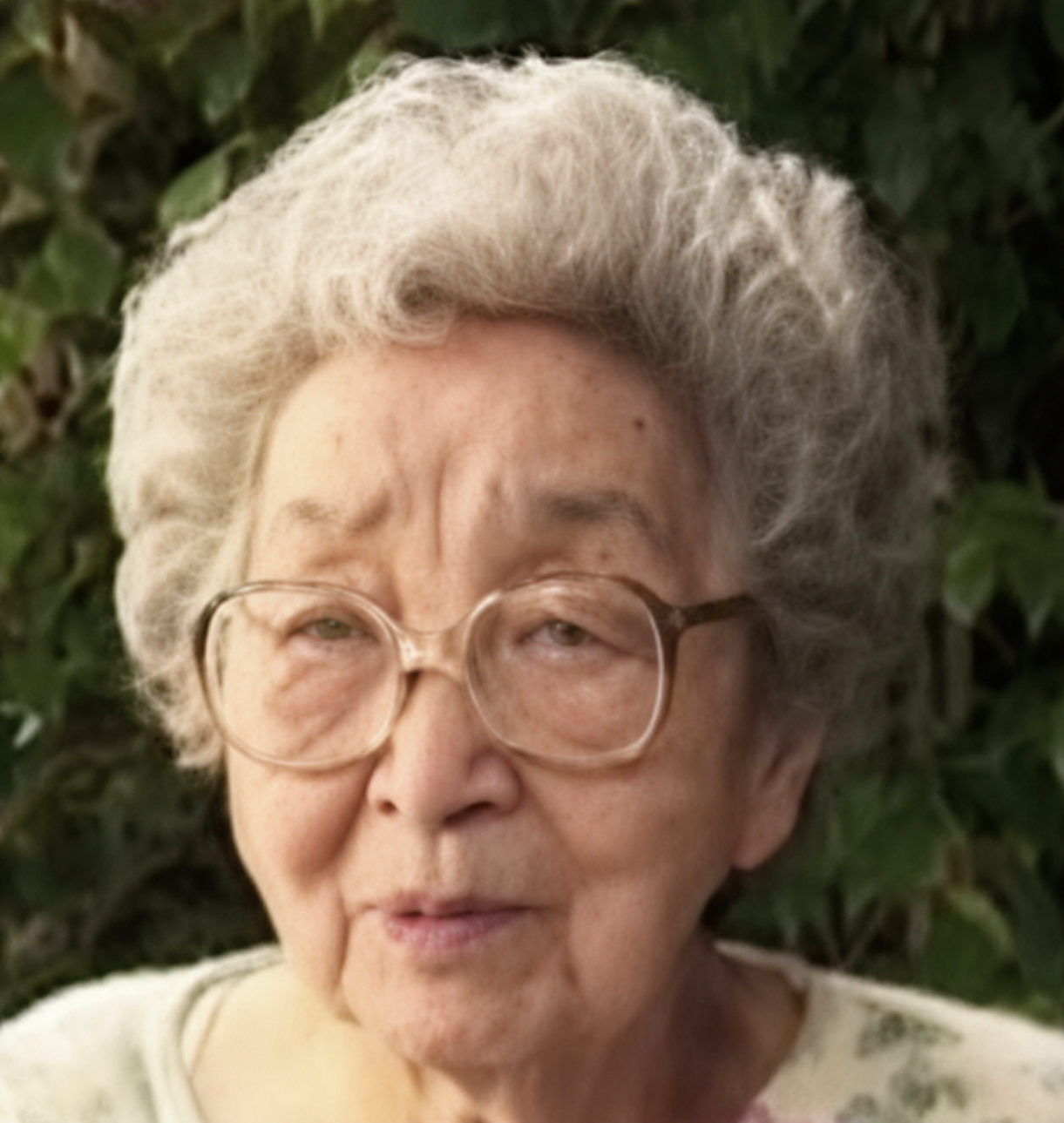
A life remembered
Sunda Hur remembered an American childhood shaped by the first generation of Korean labor migration. Born in Seattle in 1905 to parents who had left Korea for Hawaii and then the mainland, she remembered a family always moving toward work: plantation labor, railroad labor, land clearing, vegetables, tomatoes, boarding houses, farm labor, restaurants, and Midwestern business attempts. Her recollections are plainspoken, but they carry rare evidence of Korean American childhood before large organized communities existed.
Sunda's story is also a portrait of Korean American community before large postwar immigration. In Dinuba she knew Korean church plays, March First celebrations, Korean friends, and the unspoken rule of staying within one's place in a segregated society. Later, in Cincinnati, Chicago, and Los Angeles, she followed family, married Andros Han, raised a daughter, belonged to Korean Methodist and Hung Sa Dahn circles, and described a life in which Korean community supplied the social world she never expected from the wider American one. Through her, early migration appears as family work: following relatives, making church life, absorbing loss, and finding enough community to feel socially whole.
Based on interviews held by the USC Digital Library.
1903-1906
A Family Lands Where Work Can Be Found
Sunda Hur traced her family story to Korea, where hardship, flooding, and Japanese pressure helped push her parents toward migration. They traveled to Hawaii in 1903, part of the early Korean movement to plantation labor. Her father found plantation conditions unbearable and soon found a way onto another ship with his wife, mother, and young daughter Frances.
The family was put off in Seattle, where Sunda was born on November 6, 1905. Within months they moved again, reaching San Francisco around the time of the 1906 earthquake. In the interview, these movements are not described as planned migration so much as improvised survival.
Sunda's father was a laborer who took the family wherever a job appeared. They lived among Japanese people in Seattle, moved to San Francisco, went to Montana where her grandmother remembered terrible cold, and continued through railroad and agricultural work.
That opening migration also explains the tone of Sunda's later memories. She did not treat movement as adventure. For her parents, movement meant escaping one hard labor system only to face another, then negotiating with ship captains, employers, and strangers. The family's early mainland life began without secure belonging, and that uncertainty became part of the inheritance of the children born here. The family story also reminds listeners that early Korean immigration was not a single landing in Hawaii followed by settlement. For some families, Hawaii was only the first unstable step in a longer search for tolerable work on the mainland.
1911-1919
Fields, Tomatoes, and Family Loss
By 1911 the family was in Mountain View, where Sunda's sister Helen was born. Soon after, her mother died of spinal meningitis, leaving a baby and several children in a household already defined by motion and labor. Helen was placed with another Korean family who could raise her.
Her father next worked with landowners around Mountain View and Sunnyvale to clear oak trees with explosives and use the land for crops. Korean laborers joined the work, planting tomatoes and vegetables, but the arrangement failed. Sunda remembered overripe tomatoes shipped by rail and letters demanding transportation costs rather than profits.
They passed through Watsonville, Manteca, and other farm towns before reaching Dinuba. Her father read Korean newspapers to learn where work or Korean labor networks might be found, and he sometimes managed boarding houses or arranged farm jobs for other Korean men.
The death of her mother made the family's vulnerability sharper. Sunda's recollection of Helen's placement with another family is told without melodrama, but it reveals how early Korean American survival often depended on informal adoption, shared care, and painful practicality. A father who could clear land and organize labor still could not alone care for an infant while chasing seasonal work. Her father's failed agricultural arrangements also show how difficult it was for Korean laborers to move from labor into control of production. Access to land did not guarantee knowledge, capital, timing, or fair markets. A trainload of tomatoes could become debt instead of profit.
1919-1922
Dinuba and a Korean World Apart
Dinuba gave Sunda a brief but memorable Korean community. She attended high school there for about two years and remembered perhaps fifteen Korean families, a Korean Presbyterian church, holiday gatherings, plays, and social life centered among Koreans. She did not describe pressure to assimilate; instead, she said they stayed by themselves and had fun among themselves.
That separation was both comfort and racial education. Sunda said Korean children simply knew not to push themselves into American social life. She did not recall constant open conflict, but she understood a social order in which Koreans kept their place and white Americans kept theirs.
Korean independence memory also appeared in Dinuba. Sunda remembered a March First celebration around 1921, including a parade and a grand-marshal-like figure on horseback. The event shows how a small agricultural town in California could become, for a day, a stage for Korea's independence struggle.
Dinuba was important because it gave her more than wages. It gave her Korean peers, a church, holiday plays, and a public way to celebrate March First. Even if the children stayed apart from white social life, they were not socially empty. Within the Korean community, they had performance, ceremony, friendship, and a story about Korea that made their small town feel connected to a larger cause. The church gave children a stage as well as a sanctuary. Sunda remembered Christmas plays and gatherings because they let Korean children be visible to one another in a society where visibility outside the group could be risky or unwelcome.
1922-1928
Family Follows Family East
In 1922, Sunda's sister Frances married Jason Han and moved to Lincoln, Nebraska. Sunda's father missed his oldest daughter and moved the family east to join her. Work was scarce and hard, and the cold and physical strain contributed to illness and death.
After her father's death, Sunda lived with her sister Frances and brother-in-law Jason, who tried a series of food businesses. Hot dog stands, restaurant work, and invitations from other Koreans carried the family from Kansas City to Cincinnati.
Sunda also remembered her brother Paul and the scattered structure of the family after their mother's death. Some siblings were raised elsewhere, some moved for work, and some rejoined later. What held the family together was mutual obligation and the willingness to uproot when one member needed the others nearby.
The eastward moves after Dinuba show how family attachment could outweigh economic logic. Her father followed Frances not because Nebraska promised comfort, but because his daughter was there. The decision eventually exposed him to punishing work and illness, yet it also reveals the emotional structure of the family: separation was treated as a problem to be solved, even at great cost. These moves also show how thin the safety net was. When a father died, a brother-in-law, sister, or distant Korean contact might become the only available institution. Family and community had to do the work that banks, insurance, and social agencies did not do for them. The move also shows that employment decisions were emotional decisions, shaped by kinship as much as by wages.
1928-1951
Marriage, Chicago, and Korean Associations
Sunda met Andros Han in Cincinnati in 1928 and married him within a few months. He had come through Hawaii, studied in New England, and graduated from Notre Dame in engineering. Sunda remembered his education with pride and described him as good to her, good to their daughter, and respected by Korean church people.
The couple first lived in Cincinnati, where their daughter Ramona was born. Later Andros left a good job so Sunda could be near her sister Frances in Chicago. There, he joined family food businesses and Sunda entered a Korean community built around Methodist church, communal meetings, Hung Sa Dahn affiliations, celebrations, and visiting Korean students.
Chicago life remained mostly Korean in social terms. Sunda said she did not miss socializing with Americans because Korean church, association events, meals, and parties supplied what she needed. At home, the family kept a Korean structure while adapting to Midwestern household habits.
Andros Han's education brought another layer into Sunda's life. His Notre Dame degree, engineering work, and church reputation gave her marriage a different social footing from the migrant labor of her childhood. Yet the couple still made decisions around kinship, leaving a good job so she could be near Frances. Advancement did not erase the old family ethic of staying close. Her praise for Andros is understated but steady. She remembered not only his education, but his willingness to carve turkey, help women at church, and do practical domestic tasks that made him beloved in community memory.
1951-1996
California, Church, and Looking Back
After Ramona graduated from Northwestern, the family moved to California in 1951, in part so Ramona might meet Korean men in a larger community. They first lived near relatives and Korean businesses around Temple Street and then moved in 1954 to the home where Sunda was later interviewed.
Sunda compared her own childhood with her daughter's more American social life. Ramona had American friends and went through school in ways Sunda had not. Yet Sunda did not frame this as loss alone; she saw it as a different generation's opening.
In old age, Sunda spoke with bluntness and humor about death, memory, and gratitude. She credited her brother-in-law Jason and other family members with helping her survive after her father's death. Labor, movement, and mutual care run through Sunda's memories, but poverty never erased affection.
Her late reflections are modest and specific. Sunda did not claim a heroic public role, but she preserved the interior life of early Korean America: how families moved, who helped whom, which churches mattered, why children stayed with Koreans, and how a woman born in 1905 understood the difference between her own bounded youth and her daughter's wider American social world. She spoke modestly about a life that spanned the first Korean labor migrations and late-twentieth-century Los Angeles. Sunda's memory supplies a rare first-person bridge from the first Korean labor migrations to late-twentieth-century Los Angeles, preserving how an American-born Korean woman understood belonging before assimilation became an easy word.