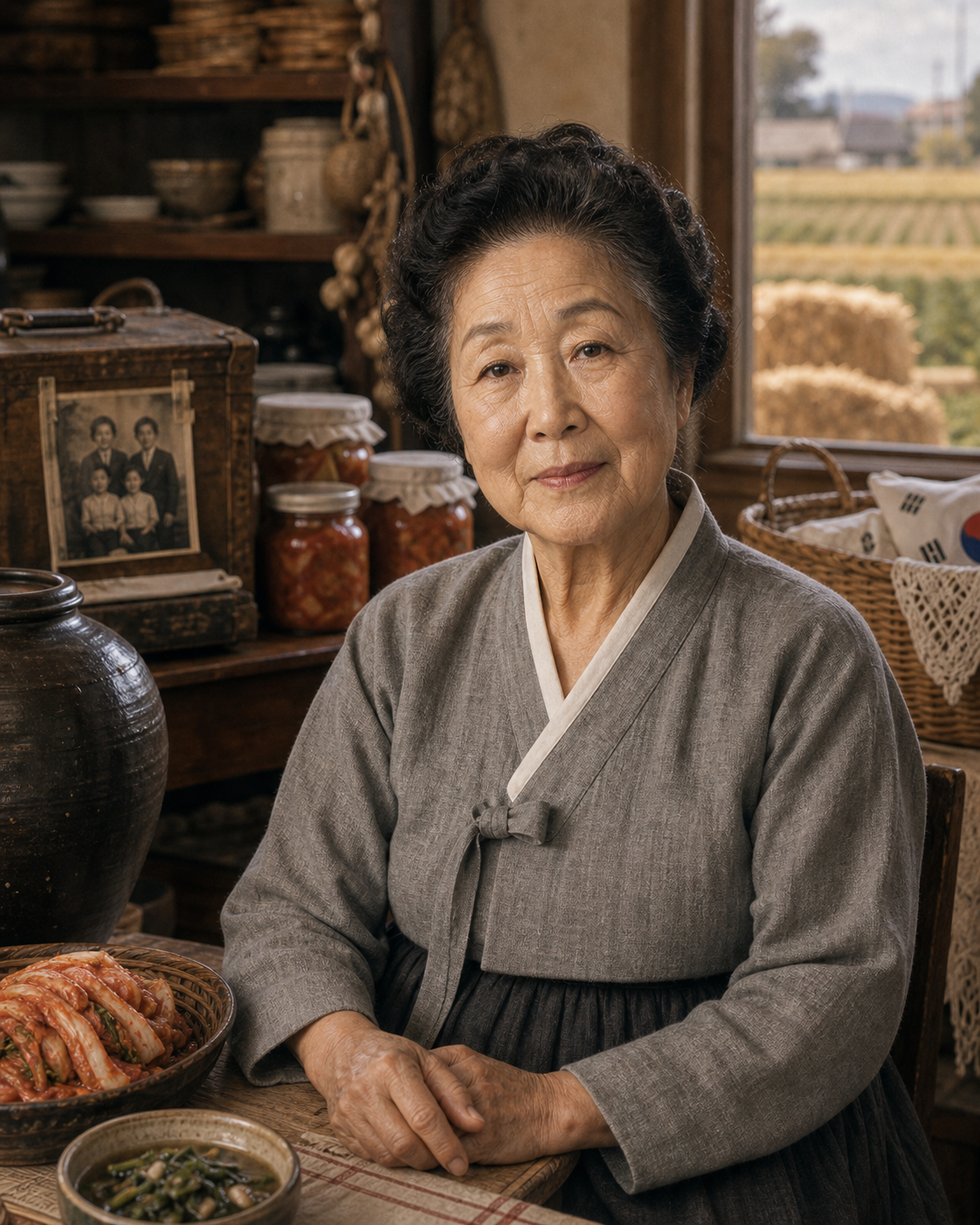
A life remembered
Ke-man Lee crossed picture-bride networks, farm households, family crises, and patriotic fundraising during her first decades in the United States. Although some details remain unclear, she consistently remembered migration as marriage, work, obligation, and community-making.
Ke-man spoke of Seattle, Montana farming, arranged marriages, women brought from Korea, children, difficult domestic circumstances, and wartime fundraising through Korean National Association circles. Her informal and often unnamed labor supported families and communities through matchmaking, farm work, food, hospitality, fundraising, and memory work.
Based on interviews held by the USC Digital Library.
Early 1900s
Marriage Routes Across the Pacific
Ke-man Lee remembered a world in which Korean men in America wrote home seeking wives and families in Korea examined letters, photographs, money, and reputations. Marriage could be arranged across oceans, with months passing between a request and a woman's arrival.
She described the risks and rumors surrounding such marriages. People feared that girls might be sold or mistreated, while others insisted that Korean women should help build Korean families in America.
Ke-man herself became part of that system and later helped others navigate it. Her memories include women who came to Oregon, Seattle, and other places, some surviving into old age and others dying earlier.
Her account makes clear that picture-bride migration was not a simple romance conducted by photograph. It involved negotiation, reputation, suspicion, and responsibility. Families worried about sending daughters too young or too far; men in America wanted wives who would join isolated work lives; women already in the community became informal brokers. Ke-man's memory preserves that female knowledge system in unusually practical detail. These stories also show how women evaluated risk.
A photograph might flatter, a letter might omit drinking or debt, and a family might misunderstand life in America. Ke-man's recollections carry the skepticism of someone who had seen what happened after the wedding, when the bride became worker, cook, mother, and negotiator in an unfamiliar landscape. Her authority came from knowing how promises looked after they became households. That knowledge made her both cautious and necessary to others.
Migration
Seattle, Montana, and Farm Life
The account places Ke-man first in the Pacific Northwest and then in Montana farming country. She spoke of living in Seattle for a period before moving into long years of agricultural life.
Farm life meant constant physical work, cooking, preserving, washing, raising children, and managing food for a household that could expand with workers and visitors. She described rice, Korean side dishes, homemade drink, and the large gatherings that formed around labor and meals.
Her husband farmed, but the household was not simple or stable. Ke-man spoke of drinking, hidden bottles, debt, loneliness, and the way a woman could be left carrying the farm, children, and household reputation at once.
The farming period is not only a story of land ownership or rural opportunity. It is a story of endurance inside a household where work and worry did not divide evenly. Ke-man measured life through meals cooked, crops handled, debts faced, and children raised. Her voice makes visible the domestic labor that allowed Korean farms to function even when the public story credited men.
The Montana years were especially demanding because distance made every problem larger. A farm household could not easily draw on a dense Korean neighborhood for help. Visitors and workers came through, but the daily burden of food, laundry, children, and emotional strain remained close to home. The farm was a workplace, a family system, and a test of endurance.
Family
Raising Children Under Pressure
Ke-man's family story is filled with children, daughters-in-law, grandchildren, and the practical question of who would cook, visit, drive, or help. She remembered children being born and raised during the Montana years and later moving into their own lives.
She did not romanticize motherhood. The work was heavy, and the interview often returns to food, laundry, illness, and the difficulty of keeping a household functioning when money and help were uncertain.
Even in old age, she thought through care in practical terms. Who would travel with her, who could steady her when she walked, who would cook rice, and who would look after whom were all part of her moral world.
Her reflections on children are tender but unsentimental. She knew that sons, daughters, daughters-in-law, and grandchildren all had their own households, habits, and limits. Food remained one way she could still participate in their lives, even when she could do little else. A pot of rice, a prepared side dish, or a request for help became the vocabulary of aging within an extended Korean American family.
Her old-age comments about care also reveal how immigration reshaped family obligation. Children who had grown up in America did not always eat, work, or organize households in the old ways. Ke-man adapted to that reality with humor and complaint, still trying to contribute while accepting that younger households had their own rhythms. Her care remained practical because practicality had always been her form of love.
Community
Helping Other Women Cross Over
Ke-man was remembered as someone who helped arrange or support marriages for other Korean women. She discussed photographs, letters, family negotiations, and the women who eventually made lives in America.
Her work was not formal social service, but it mattered. In isolated Korean settlements, matching couples, hosting people, and helping newcomers understand where to go could change the course of a life.
She also described Korean social gatherings built around farms and homes. Large groups shared food, talked about crops, politics, and family, and kept Korean customs alive through repeated acts of hospitality.
Her matchmaking and hosting show how women built community before formal institutions could reach everyone. A household became a transit point for letters, photographs, introductions, meals, and advice. Ke-man's authority came from experience: she knew who had arrived, who had survived, who had married well or badly, and who might need help crossing the next threshold.
Men talked crops or politics, children filled rooms, and women cooked and served. For isolated Korean families, the meal table became an institution where no formal hall existed, giving scattered people a room of their own.
1940s
Women, Bonds, and Patriotic Work
During the war years, Ke-man said she represented Korean National Association circles in selling bonds and raising money. Events took place in public venues, including places she associated with Hollywood Bowl and Pasadena.
She emphasized that women worked hard in these efforts and often raised significant funds. Her account adds women to a history too often told through male officers and public speakers.
Certificates and records mattered to her, but some were sent away or lost. Like other interviewees, she knew that documents and photographs could become historical proof, even when there was no secure archive to keep them.
The fundraising memories also complicate gendered assumptions about political work. Ke-man remembered women traveling, selling, organizing, and raising money in Korean names at public events. They were not simply supporting men; they were doing the visible and invisible labor that made patriotic campaigns possible. Her frustration over recognition and records reflects a historian's instinct, even if she never used that language. Her bond-selling and fundraising memories connect rural and urban Korean America.
Even women who spent years in farm households entered national and wartime causes through association networks. Ke-man took pride in placing private sacrifice within a larger Korean cause, as women transformed domestic skill and community ties into public fundraising.
Later Life
Travel, Food, and the Weight of Remembering
In later life, Ke-man spoke of travel, friends, Canada, Oregon, grandchildren, and the limits created by age and health. She still wanted to move through the world, but she needed someone to accompany and protect her.
Food remained one of her main languages of care. Rice, noodles, Korean sauces, preserved foods, and shared meals appear throughout the account as signs of both survival and affection.
Ke-man Lee's life records the infrastructure women created through marriage brokerage, farm labor, cooking, fundraising, and memory in places where formal institutions were thin.
In old age, her speech moved from names to food, from Oregon to Montana, and from old marriages to present aches. Beneath those shifts was a consistent pattern: wherever Koreans needed feeding, matching, remembering, or gathering, she understood the work and usually did some of it.
Names, places, and dates sometimes blur, but the emotional map remains clear: departure, marriage, farm labor, community responsibility, aging, and the fear that women's work will disappear from memory. Her testimony keeps that ordinary labor in public view.