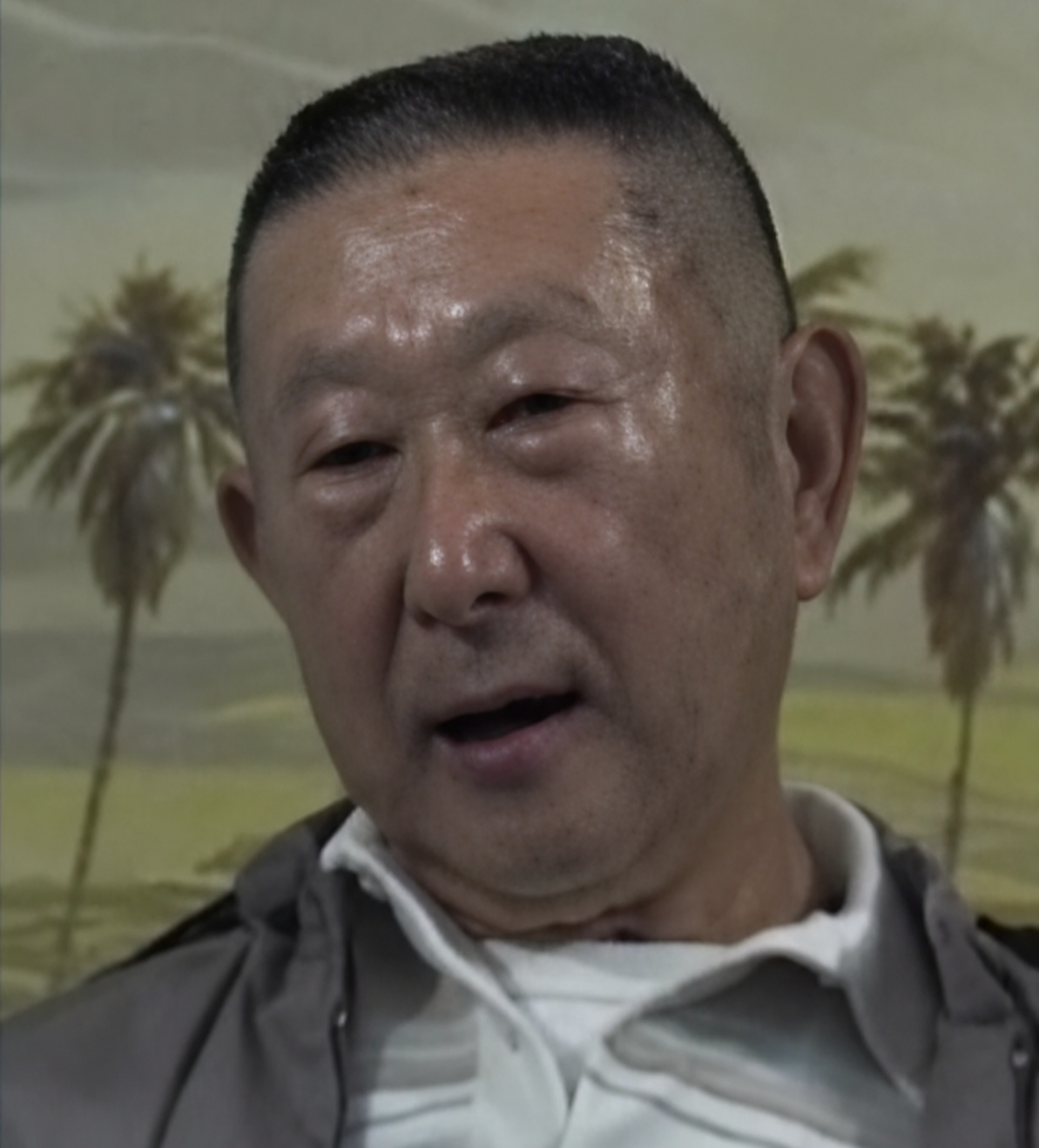
A life remembered
Harold Yoon inherited family routes that ran through Korea, Manchuria, Hawaii, Mexico, California farm towns, Los Angeles, and World War II. The oral-history material is difficult in places, but the life arc is clear: Harold was born in California in the 1910s, the son of a father who came through Hawaii and California and a mother whose family endured the Yucatan Korean labor migration before reaching the United States.
His memories are strongest around movement, work, and adaptation. Harold recalled Korean-speaking farm households, rice and watermelon fields, labor camps, schoolyard embarrassment over language, a family fire, produce trucking, high school and farm labor, military service, marriage, children, and later wage and union work. Repeated instability taught the family practical skills, humor, and persistence.
Based on interviews held by the USC Digital Library.
1900s-1910s
Parents Across Korea, Hawaii, Mexico, and California
Harold Yoon placed his father's story in northern Korea, family hardship, China or Manchuria, Hawaii, and then California around the first decade of the twentieth century. His father, remembered as Yun Kang Hak or a similar Korean name in the oral-history material, worked in practical jobs such as cooking, butchering, and farm labor after reaching the mainland. Harold admitted that he knew only fragments because his father did not speak much about the past.
His mother's migration was even more far-reaching. Harold described her family as part of the Korean movement to the Yucatan peninsula of Mexico, where migrants expected opportunity but encountered harsh labor and disappointment. From Mexico and Chihuahua, family members eventually made their way toward the United States, with marriage correspondence linking his parents' paths.
These two migration lines met in California. The family story carried both familiar Korean American routes through Hawaii and the less commonly remembered Yucatan labor history. Harold kept both routes in view even when names, dates, and places came to him imperfectly.
Harold inherited a family story formed by people who had crossed borders under pressure, often without the leisure to preserve documents or explain everything to children. His pauses and approximations reveal how diaspora memory works when parents are silent, records are scattered, and children learn the past through fragments: a place-name, a job, a marriage arrangement, a relative left behind. The gaps caution against forcing false precision onto a family history carried orally across several difficult migrations.
1910s-1920s
Rice Fields, Watermelons, and Korean Speech
Harold was born in California after an older brother had been born in San Francisco. The family moved through Merced, Willows or the Marysville area, and other farming places where Korean families worked rice, watermelons, and other crops. He remembered going into the fields with his father, the presence of labor camps, and mothers cooking for workers.
Korean was the language of his earliest home. Harold remembered arriving at school unable to answer a simple question in English and feeling the sting of being teased. That moment led him to decide that he would learn English and use it, a decision that also contributed to the fading of Korean language among the children.
The Korean community around the rice fields was small but socially alive. Harold remembered baseball games, bachelor workers, and young men with strong national feeling. Stories of Korean aviators and anti-Japanese hopes circulated around the community, giving children a sense that even rural California was connected to Korea's future.
That decision about English was both protective and costly. Harold wanted to avoid humiliation, so English became his public language, while Korean remained attached to parents and early childhood. Many second-generation Korean Americans made similar shifts, trading fluency for social safety at school. In Harold's life story, language loss is not failure; it is evidence of a child adapting to a world that punished difference. The loss would matter later, when he could remember Korean feeling and family context more easily than Korean speech itself.
1920s-1930s
Fire, Movement, and Los Angeles
A fire disrupted the family and sent them moving again. Harold's recollections of the event are fragmented, but he remembered the household scattering, temporary stays with friends, and a return to urban California life. Like many Korean American families, the Yoons moved because work, housing, and survival kept changing shape.
The family eventually spent time in Stockton, San Francisco, and Los Angeles. Harold recalled neighborhoods, schools, and the movement of brothers into trucking and produce hauling. The family economy depended on everyone doing what was needed, whether that meant school, field work, deliveries, or helping with a business.
Los Angeles also offered a larger Korean social world. Harold remembered Korean families, youth friendships, dances, and ties that later mattered in courtship and marriage. The city did not erase hardship, but it gave Korean Americans more contact with one another than isolated farm districts could.
Movement also changed how Harold understood family competence. Adults were expected to find housing, restart work, and reconnect with relatives after each disruption. Children watched and learned that stability was something produced again and again, not something guaranteed. By the time Harold reached Los Angeles, he had already seen the family depend on networks, vehicles, borrowed rooms, and quick decisions as much as on formal plans. This habit of restarting became one of the skills Harold carried into adulthood, even when he described it more as necessity than as resilience. The interview's roughness leaves some routes uncertain, but not the emotional pattern of rebuilding.
1930s-1940s
School, Farm Labor, and the Army
Harold's school memories include junior high, Polytechnic High School, sports, teachers, and the tension between wanting education and needing to work. After graduation, his father wanted him to go to college, but the family economy pulled him into farm labor. A summer picking and hauling peaches taught him how hard the agricultural life could be.
World War II redirected his path. Harold described military service connected to anti-aircraft units and wartime training, with references to Alaska, Illinois, Europe, and the Battle of the Bulge era appearing in the oral-history material. The details are not always clean, but the account clearly places him among Korean American men whose adulthood was marked by service.
Military life also introduced new kinds of discipline, risk, and distance from home. Harold's wartime memories move quickly and sometimes humorously, but they belong to a broader story of Korean American loyalty during a period when Asian Americans were often viewed through suspicion. Service became one more way his generation negotiated belonging.
The tension between school and work runs through Harold's account. His father valued education enough to urge college, but the family economy could not always support that desire. The summer of peach work, with long days and physical exhaustion, became a practical lesson in what agricultural labor demanded. It also marked the boundary between youthful possibility and the adult obligation to help keep the family afloat. That boundary is central to his life story because education remained respected even when labor won the immediate argument.
Postwar
Marriage, Produce, and Starting Over
Harold's postwar life returned to Korean community networks. He knew his future wife, Mary, through family and friendship circles, including her brothers and other young people who gathered at dances and social events. Their marriage joined personal affection to a familiar Korean American pattern: people who had known one another through community life eventually building households together.
The family worked in produce shipping and related businesses, including peaches and other fruit. Harold remembered large shipments, trucks, packing, and financial losses when fruit spoiled in transit or markets failed. Business success could disappear quickly when weather, transportation, or timing went wrong.
After setbacks, Harold took wage work, including years at Hughes Market and later work connected to trucking, unions, or training. He did not romanticize these transitions. He moved from family enterprise to wage labor with the same practical ethic: work, adjust, support the household, and keep moving.
Perishable goods made every decision in the postwar produce business urgent. A shipment could represent months of labor and still be ruined by melted ice, delay, or a bad market. Harold's memories of spoiled fruit and bankruptcy describe how distance, timing, and credit could overwhelm a small family business. He later chose steadier wage work, a less ambitious path that offered his family more security.
Later Years
A Life of Practical Endurance
Harold's later memories include children, moves, and the widening geography of family life, with references to England, children born or raised abroad, and adult children finding their own paths. The oral-history material makes some details uncertain, but it is clear that family remained the frame through which he understood work and sacrifice.
Practical endurance runs through Harold Yoon's recollections. He did not present his life as heroic in a polished way; instead, he remembered vehicles, crops, wages, school, spoiled fruit, army units, and family obligations. Those details reveal how Korean American history was built in repetitive labor as much as in public institutions.
Harold's family history crosses several Korean diasporas at once. Through his parents, it touches Hawaii, Mexico, Korea, and California; through his own life, it touches farm camps, war, markets, and postwar family life.
Harold remembered his life in bursts of occupations, crops, places, relatives, and mishaps. The chronology is rough, but the practical details are precise: a truck, crop, or job often stayed with him more clearly than a formal date. Those fragments trace how he adapted each time work or circumstance changed.