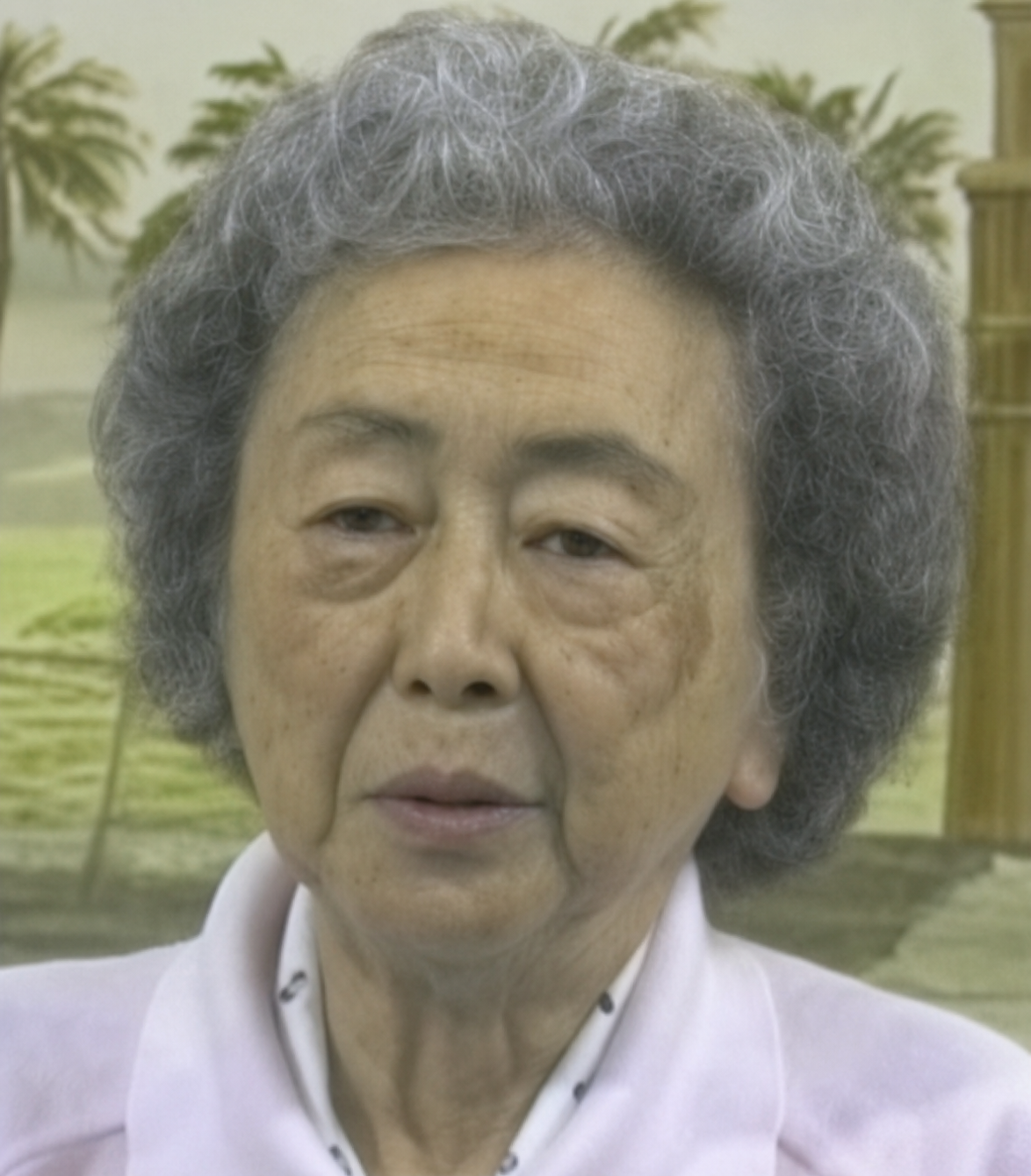
A life remembered
Gloria Park was born in Riverside, California, on February 12, 1921, into one of the Inland Empire's early Korean families. Her father's migration moved through Hawaii and then Riverside, where he worked, farmed, built a wholesale produce business, brought family members from Korea, and became known for church commitment, Sunday gatherings, and community help.
Gloria's memories follow a family that moved from Riverside to Los Angeles, McFarland, Delano, Bakersfield, Fresno, Woodland, and back to Los Angeles as work, farming, war, marriage, and children required. She remembered Korean language at home, Presbyterian church life, Korean school, community picnics, segregation, wartime suspicion toward Asians, five brothers in military service, and a lifelong ethic of education, work, and family loyalty.
Based on interviews held by the USC Digital Library.
1921-1930s
Riverside Beginnings
Gloria Park was born in Riverside, California, where her father had become part of one of the region's early Korean communities. As she understood the family story, he had first gone to Hawaii with his father to work in sugarcane, then chose the mainland after other Korean men urged him to seek education and opportunity. He did not receive the formal education he imagined, but he built a life through work.
Her mother came from Korea after correspondence and family connections made marriage possible. The couple settled in Riverside, and all six children were born there. Gloria remembered the family first living in the country while her father farmed, then moving into the city as he developed a wholesale produce business that supplied restaurants and hotels.
Her father also helped bring relatives to the United States, including a brother, sister, and mother. Family life was extended rather than narrow. Sunday dinners gathered siblings, in-laws, cousins, and elders, with Gloria's mother preparing Korean food and sustaining the household's center.
Riverside mattered because it was both agricultural and communal. Gloria's father was not simply earning for his own household; he was building a network of relatives and Korean neighbors who could gather, worship, eat, and help one another. The two-story house, produce routes, ranch memories, and Sunday meals all show a family moving from immigrant labor toward a more settled local presence without losing its Korean center. Those Sunday gatherings also trained children to see kinship as practice: people belonged because they showed up, ate together, helped, and remained accountable to one another.
Childhood
Korean at the Table and in the House
Korean language, food, and custom structured Gloria's childhood. Her parents spoke Korean to the children, meals were Korean, and the household operated with a clear division of authority: her father as provider and public leader, her mother as disciplinarian and daily manager. Gloria remembered the arrangement without bitterness; it was simply the family world she knew.
As the only girl among five brothers, Gloria was often pulled into her brothers' play because her mother insisted they include her. She knew herself as Korean from the beginning, not because of a single moment of awakening but because every part of family life taught it. In Riverside, cousins and Korean friends formed the social circle that mattered most.
The family also participated in Korean church and language-school life. Gloria did not remember every institutional detail from Riverside, but she remembered the pattern: church, Korean lessons, family gatherings, and community obligations. Belonging came through repetition and proximity, not formal speeches.
Her mother's labor made that public family life possible. The interview repeatedly returns to meals, discipline, language, and the practical management of children and relatives. Gloria's father may have stood at the head of the table, but her mother made the table function. That balance of authority and daily care shaped Gloria's later understanding of family duty, especially the expectation that children help, study, and remain connected. That lesson later shaped how Gloria interpreted sacrifice, not as dramatic self-denial but as the daily discipline of keeping relatives, elders, and children within reach.
1930s
Los Angeles, Korean School, and Segregation
When Gloria was around eleven or twelve, her family moved to Los Angeles as her father pursued produce work near Jefferson Boulevard. She attended Thirty-Sixth Street School and then other Los Angeles schools, while also going to Korean language school after regular classes. Sundays remained tied to Presbyterian church life at changing locations.
A summer Bible school outing gave her one of her first painful experiences of racial segregation. At a Christian picnic in Pasadena, she expected to swim with the other students but was not allowed to use the pool with them. Gloria remembered coming home angry that a religious setting could reproduce the exclusion she had been taught Christianity should resist.
Outside such moments, her social world remained largely Korean and Asian American. Girls' clubs, boys' clubs, church gatherings, dances, and community events brought Korean young people from Los Angeles, Northern California, and Central California together. These networks gave Gloria friendship and identity even when the wider city limited belonging.
The segregation at the pool stayed with Gloria because it contradicted the moral language around her. It was not simply that she was excluded; it was that exclusion happened during a Bible-school outing meant to represent Christian fellowship. Her refusal to return to that school was a child's moral judgment. She understood early that institutions could preach equality while practicing separation. It also explains why Korean institutions mattered so much: they offered spaces where children did not have to ask whether they would be admitted.
1940s
Farms, War, and Work
Economic difficulty drew the family back into agricultural life. Gloria remembered McFarland, a converted barn used as housing, farm work with melons and produce, and brothers who had to leave school or college to help support the family. The sacrifices were painful, especially for siblings with strong academic promise.
World War II entered the family through military service and wartime labor. Five brothers served, and Gloria remembered being fortunate that all returned, despite illness and hardship. She worked in Army Air Force supply settings and later in Fresno, then came back to Los Angeles and completed beauty school after a sister-in-law encouraged her.
The war also heightened anti-Asian suspicion. Gloria recalled people asking why Koreans were not in camp and remembered the pressure of being mistaken for Japanese. Yet she also worked with mostly white coworkers in military settings and described many everyday relationships as workable once people knew who she was.
The war years also demonstrated how quickly public identity could shift. Koreans who had long opposed Japanese colonialism could still be read by strangers as Japanese and treated with suspicion. Gloria's family answered that pressure through service, work, and ordinary relationships. Brothers entered the military, Gloria worked in war-related offices, and the family continued to insist on education even when poverty had already interrupted schooling. Her memories place patriotism and vulnerability side by side, showing a family loyal to the United States while still exposed to the racial shortcuts of wartime America.
Marriage
Marriage, Woodland, and a Return South
Gloria met her future husband through Korean community circles, and his persistence gradually changed her view of him. Their wedding was a community event, supported by mothers and family friends who cooked and prepared food for the reception. In the account, marriage appears not as a private couple story only, but as something the whole Korean community helped make.
After marriage, she worked for a time in a beauty shop and then moved to Woodland, where her husband's family wanted him involved in a packing shed. Their daughter Leslie and son Rusty were born during those years. When the packing shed ran into trouble, the family returned to Los Angeles because work required it.
Back in Los Angeles, Gloria and her husband raised their children through apartments, neighborhood schools, and practical ambitions. She wanted them to have things she had lacked, such as bicycles, roller skates, and fuller educational opportunities. Her parenting carried forward the lesson of her own family: children needed schooling, discipline, and confidence to move ahead.
Her own parenting was shaped by remembered scarcity. A single pair of roller skates, no bicycle, and limited leisure became benchmarks against which she measured what she wanted for Leslie and Rusty. These were not luxuries in a shallow sense; they represented childhood room, the chance to belong among classmates, and the parental wish that the next generation feel less constrained by economic struggle. Her account makes those parental choices feel modest and profound at once, the small material signs of a childhood widened beyond bare necessity.
Community
Education, Picnics, and Community Duty
Gloria's strongest memories of community were often ordinary pleasures. Korean families gathered for Easter, Mother's Day, Father's Day, barbecues, and park picnics, with mothers preparing food and children playing while adults renewed ties. Her father loved organizing these events, and they remained among her happiest memories of growing up.
Her father also stood out as a helper and protector. Gloria remembered him arranging rides, medical help, church support, property efforts, and practical assistance for people who had few resources. He helped establish Korean Presbyterian church life, contributed to property and memorial projects, and tried to serve whenever he could.
Gloria Park remembered Korean American family life in Riverside, Los Angeles, and the Central Valley. Migration, farm labor, church, military service, racial exclusion, education, and food all belonged to the same family story. She remembered a family that worked hard, stayed close, and taught its children to keep going.
Gloria's strongest memories concern community life: people carried food, organized park gatherings, arranged rides, and pooled their effort for church and family events. Parents with little free time still gave it to one another. Picnics and church work occupy more space in her interview than any single career title.