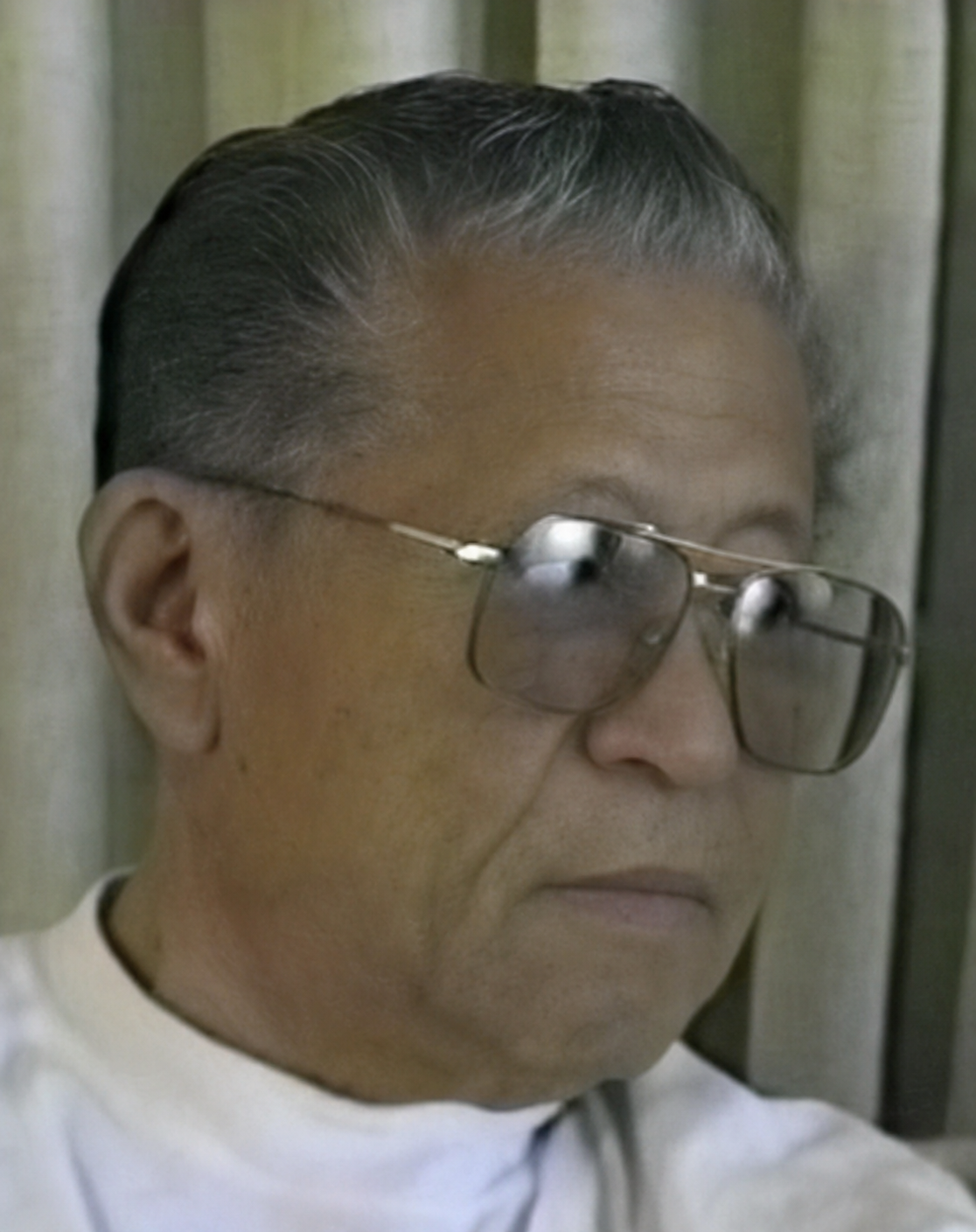
A life remembered
Riverside and Los Angeles framed Daniel Park's path from Korean church and school into engineering, family life, and community leadership. Born in Riverside around 1930 to Park Young Sub and Doris Kim Park, he carried both his father's Korean immigrant story and his mother's family history from the Korean migration to Mexico's Yucatan region before California. The interview also preserves a family line connected to the Korean Mexican diaspora, making Daniel’s story broader than a conventional California migration account.
Daniel remembered poverty without self-pity, Korean identity learned partly through wartime contrast, UCLA and Berkeley engineering, a long career at North American/Rockwell-related aerospace work, and community organizing through Korean American civic groups, sports teams, reunions, and museum efforts. His interview is candid about assimilation, intermarriage, ambition, and the informal affection of Korean American families. Daniel was most vivid when he spoke about church gyms, engineering offices, family reunions, and the civic spaces where people gathered.
Based on interviews held by the USC Digital Library.
1904-1930s
Parents, Yucatan, Riverside, and Los Angeles
Daniel's father, Park Young Sub, came to the United States in the early twentieth century, with family memories placing him in Riverside and produce-related work before Daniel was born. His mother, Doris Kim Park, was born in Mexico after her parents joined the Korean migration to the Yucatan Peninsula, where Koreans had been recruited under exploitative conditions before some families made their way north.
Doris's family crossed borders under difficult and sometimes precarious circumstances, eventually reaching California. Daniel remembered large family photographs from Villa Park and Orange County, with uncles, aunts, and his mother marking a branch of Korean American history that passed through Mexico rather than Hawaii alone. The family's story connected Korea, Mexico, Riverside, and Los Angeles.
Daniel was born in Riverside, but the family moved when he was very young after the produce business failed. His earliest Los Angeles memories came from neighborhoods around Twenty-Eighth Street, Normandy, Adams, Thirty-Seventh Drive, and nearby schools. Poverty was present, but he remembered being fed, clothed, housed, and cared for.
The Yucatan material also gave Daniel's family history an unusual geography. His mother's relatives carried memories of recruitment, border crossing, deportation risk, and eventual settlement in Orange County. Those stories complicated the simpler idea that Korean American origins ran only through Hawaii or mainland picture-bride routes, and Daniel preserved them through family photographs and account explanation. By keeping those names and photographs in the account, Daniel helped preserve a migration route that is often overshadowed in Korean American memory.
1930s-1940s
Childhood, War, and Korean Identity
Daniel did not remember a single moment when he first knew he was different, but wartime Los Angeles sharpened Asian identity. Living near a Japanese Christian church and seeing Japanese families disappear during the war made him more aware of being Korean. His father made clear that the family was Korean, not Japanese, in a climate where strangers often confused Asian groups.
At home, Korean affection was quiet rather than demonstrative. Daniel described his father as the authority and his mother as the person who handled emotional life, but he did not remember hugs and kisses as part of family expression. He associated Korean family feeling with an unspoken bond rather than verbal display.
Food, church, school, and neighborhood shaped the texture of childhood. He remembered simple meals, his mother's work as a seamstress, his father's work in the wholesale produce market, and a household that expected education. He also remembered his father celebrating the birth of a son in a way that reflected older Korean gender values.
Daniel's wartime awareness grew less from formal lessons than from neighborhood observation. A nearby Japanese church emptied, his father identified the family as Korean, and children learned that public misunderstanding could follow an Asian face. The experience did not make Daniel fearful in the telling, but it helped him understand that identity could become visible suddenly, depending on history outside the home. The wartime setting also gave young Daniel a sense that he represented more than himself when he moved through public spaces.
1940s
School, Church, and Korean Youth
Daniel attended Los Angeles schools and later Manual Arts High School, where he did well academically without describing himself as especially driven. Math and science led him toward engineering early. He also remembered church as the main social structure for Korean American youth, with basketball, friends, and gatherings organized through Korean Christian circles.
Korean language school left a mixed impression. Mrs. Rhoda Lim picked up neighborhood children and took them to classes near the Korean National Association and the press building, but Daniel often escaped through the back or treated the lessons as boring. Still, the language school and church drew Korean children together, creating friendships that mattered even when the language itself did not take hold.
The Korean Tigers and related sports groups gave young men a shared identity. Basketball, group outings, and church-centered social life helped meet needs that the broader school world did not. Daniel later recognized that the small Korean community created strong networks, even if the young people did not always think of them as historical.
The youth institutions mattered because they gave Korean American children a protected arena for confidence. Daniel might not have loved language lessons, but he valued the friendships and basketball that gathered around them. In a small community, the same children met in church, on teams, at dances, and in family networks, making social life dense even when numbers were few. Those repeated encounters explain why Daniel later found reunion work natural; community had always been something made by gathering the same people again.
Late 1940s-1953
UCLA, Berkeley, and Engineering
Daniel began at UCLA and later transferred to Berkeley because he wanted civil engineering. He later described ending up closer to electrical engineering, but the larger point was clear: school offered a route into professional life. He graduated around 1952 or early 1953, with a college portrait and memories of engineering studies, basketball, and commuting social patterns shaped by limited money.
His college social life remained connected to Korean and Japanese American circles. He lived at home while at UCLA and had little money for dating. At Berkeley he stayed in a Japanese American setting and participated in dances and group events, moving through a postwar Asian American world where friendships often crossed Korean and Japanese lines even as older histories remained present.
Daniel's account of education is understated. His parents did not micromanage homework, but they made college an expectation for the children. He later reflected that a single word, education, carried enough force in the household to shape his and his siblings' professional futures.
His college years also show the quiet limits of money. Dating, clubs, and broad campus exploration remained secondary to commuting, classes, and practical goals. Daniel did not present this as deprivation; it was simply the framework he knew. Engineering appealed because it matched his strengths and promised work that could carry him beyond the narrow opportunities available to his parents. His education story is practical rather than romantic, grounded in tests, majors, commutes, and the need for a secure profession.
1950s-1990s
Career, Family, and Intermarriage
After college, Daniel worked for North American Aviation and related successor organizations for more than twenty-seven years, with periods at Rockwell and other assignments. He spoke of technical work, managers, possible ceilings, and the habit of not making waves. Looking back, he could see how race and expectation might have limited ambition, even where he had not named it at the time.
Daniel married Frances, a Japanese American woman from Hawaii. He understood that his wife's Japanese background could make some Korean gatherings feel awkward for her, but he did not recall serious hostility from his own community. The marriage became part of his broader reflection on identity: being Korean, marrying across lines, and raising children in a more openly multicultural environment.
His family included children and grandchildren, and photographs in the account placed him with Frances, daughter Susie, sons Steve, Tommy, and Ken, and granddaughter Alyssa. Daniel compared his children's lives with his own, noting both greater opportunity and the challenge of knowing what one wants when doors are more open.
Looking back, Daniel did not claim that discrimination was always explicit. He did recognize that assumptions about who belonged in upper management could shape a career before anyone named them. He had been competent and able to advance, but he also wondered whether self-limitation had become a way to survive. He spoke about that possibility without bitterness.
Community
Community Leadership and Reunions
Daniel belonged to one of the large extended Korean American family networks in Southern California, and he enjoyed gathering people. He was active in the American Korean Civic Organization, helped bring dispersed people together for reunions, and supported museum-related efforts. He described these activities less as formal ambition than as enjoyment of people and satisfaction in reconnecting them.
His reflections on newer Korean immigrants were candid and sometimes critical, especially around work, money, and family time. He worried that business demands could consume parents before they knew their children. Still, he recognized parallels between immigrant generations: language difficulty, pressure to succeed, and the search for belonging.
Daniel Park spoke candidly about assimilation. He did not speak Korean fluently and often felt simply American, yet Korean church, family, sports, and civic work continued to shape his relationships.
The community work brought Daniel back to the networks that had formed him. Reunions, civic groups, sports memories, and museum projects gave him ways to translate personal sociability into public preservation. He liked people, but that simple pleasure had historical consequences: through gathering names and faces, he helped keep a dispersed second-generation Korean American world recognizable to itself. Daniel understood that communities survive when someone keeps calling people back into relationship, and he did that work as faithfully as his professional work. That instinct made him a keeper of continuity.