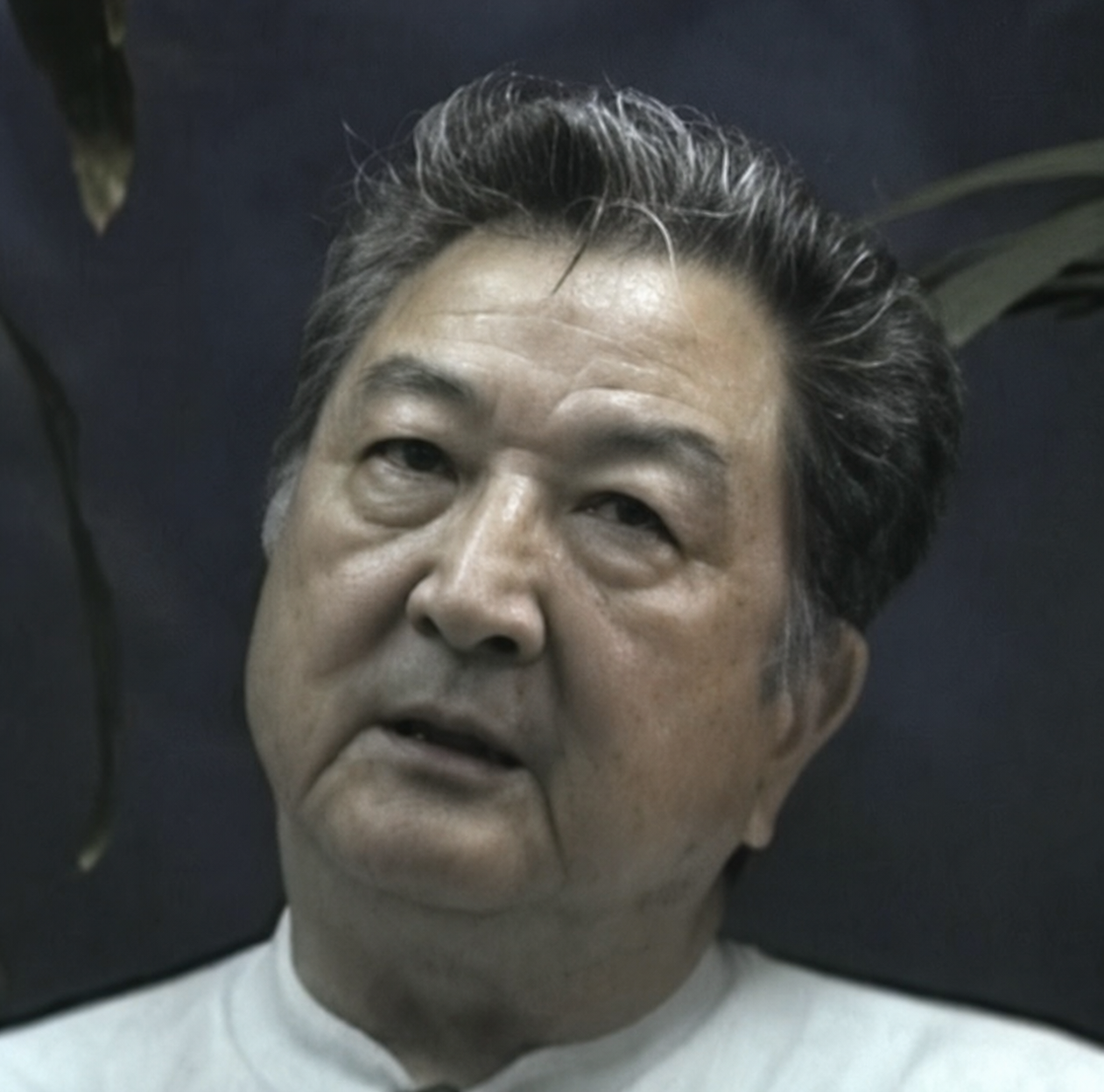
A life remembered
Bethuel Chung grew up in Dinuba, California, carrying family memories of difficult migration into the agricultural world of the Central Valley. His father, remembered as an orphan who worked in mines before coming through Hawaii and California, became a labor leader and crew boss for Korean workers. His mother, educated in Korea and Shanghai, came as a picture bride after a period of correspondence and support from Bethuel's father. Much of the account is filtered through family memory, and Bethuel repeatedly marks what he knows, what he assumes, and what he heard from others.
Bethuel moved from field labor and segregated schools to wartime military service, UCLA engineering, marriage, and aerospace-related work. He remembered rural life in exact details: grape trays paid by the penny, a gamble on watermelons, church picnics, and a Korean neighborhood west of the tracks. His technical career began far from a laboratory, in fields, kitchens, and church rooms.
Based on interviews held by the USC Digital Library.
1900s-1920s
Parents from Korea to Dinuba
Bethuel remembered his father, Chung Gook Hyun, through stories passed down by relatives and by his mother. The details were sometimes uncertain, but the family memory placed him as an orphaned boy who worked around tungsten mines near Pyongyang before coming to Hawaii as part of the early Korean labor migration. From Hawaii he moved to California, taking hard work wherever it could be found.
His mother, Kang Hyun Suk, came from a more educated background. Bethuel understood that she had studied as far as a Korean girl of her generation could and later spent time in China, likely Shanghai, before coming to the United States. His father supported her schooling and corresponded with her before arranging the marriage, a picture-bride story Bethuel told with careful qualifications.
The couple made their life in Dinuba, where Korean workers gathered around farms, packing houses, church, and labor networks. Bethuel's father worked for employers such as Sam Sarabian, learned cooking and field labor, and eventually became known as someone who could organize crews and negotiate work for Koreans in the region.
Bethuel's caution around these memories is part of their integrity. He often distinguished what his mother told him, what siblings repeated, and what he could only infer from dates and circumstances. That habit keeps the story from hardening family tradition into false certainty, while still allowing the migration story to show its emotional shape. The uncertainty also reflects the immigrant conditions themselves: records were scarce, stories crossed languages, and children often learned parental history only in fragments.
1920s-1930s
West Side Community and Korean School
Bethuel was born in 1925 and grew up in a Dinuba world marked by racial boundaries. He remembered living on the west side of the tracks, where Koreans, Mexicans, Filipinos, Japanese, and other nonwhite residents were expected to live, while white residents occupied the east side. Even the cemetery reflected segregation until later changes blurred those divisions.
Korean community life centered on the Presbyterian church and Korean school. Bethuel recalled twenty to thirty Korean families, a church that could fill with people, and language classes after American school. The teacher, Ki Won Jung, helped children learn reading, even if vocabulary and fluency depended on use at home.
The community also connected families to nationally known Korean figures. Bethuel remembered Jacob Dunn, a highly educated Korean American, naming several of the Chung children with English names drawn from biblical and classical sources. Such details show how a small rural community could still be tied to transnational politics, education, and prestige.
Dinuba's Korean school also gave children a social map. Names such as Chang, Shim, Lee, and Sur appear in Bethuel's recollections not as isolated facts but as neighbors, classmates, boarders, and church people. The community was small enough that a boarding house, a church, and a few blocks could connect labor, marriage, education, and political talk. In this setting, a child's identity was assembled from addresses, church pews, school benches, and the adult names repeated at gatherings. It also shows why Bethuel treated parental memory as community history, not merely private ancestry.
Depression Years
Field Labor and the Family Economy
Bethuel's childhood was inseparable from field work. Before school began each fall, children picked grapes for a penny a tray, and school itself could be delayed until the crop was in. He remembered being taken into the fields as a very small child while his mother worked, then later helping with pruning, grapes, watermelons, cantaloupes, and other seasonal labor.
His father was both laborer and crew organizer, a man of endurance who could outwork younger men well into old age. Bethuel described him behind a mule, managing crews, finding jobs through white or Armenian farmers, and refusing relief during the Depression out of pride. He worked until around seventy-eight, long after most people would have stopped.
The family was poor, but Bethuel remembered food security through chickens, eggs, milk, fruit, rice, and homemade Korean foods. The house had an outhouse, a potbelly stove, a wash tub for bathing, and few luxuries. These details make the Depression visible not through statistics, but through meals, chores, heat, plumbing, and the daily calculations of a farm family.
Bethuel's field memories also reveal how children learned responsibility before they had language for class or race. Planting watermelon seed covers, feeding chickens, cutting grass, and walking for milk were ordinary chores, but they trained endurance and attentiveness. The family economy depended on such small tasks, and the children understood that helping was not optional. Bethuel's matter-of-fact tone makes the labor more powerful, because he remembered it as ordinary family life rather than as an exceptional hardship.
1930s-1943
Race, School, and Self-Assertion
School gave Bethuel both opportunity and reminders of hierarchy. He attended local schools in Dinuba, remembered being small but quick, and learned early that a child sometimes had to assert himself. He also recalled fights between Korean and Japanese boys, shaped by the politics of Japanese rule in Korea, though his memories distinguished those childhood conflicts from later reflection.
High school brought football, band, and an accelerated path toward college during wartime. Bethuel played on the lightweight football team and took pride in being fast and effective despite his size. He also played cornet in the band, earning money in the fields for the instrument and joining parades in nearby towns.
Segregation appeared in painful episodes. Bethuel remembered being excluded from a Boy Scout swimming party because he was Asian, and he later recalled a Los Angeles apartment where one resident objected to his moving in after marriage. He did not let those incidents define him, but neither did he erase them.
His school years show a young person testing the boundaries of a segregated world. Being small made him vulnerable, but it also sharpened his determination. Football, band, and academic acceleration gave him public measures of competence in a town where race and poverty otherwise narrowed what people assumed about Korean children. The combination of academics, music, and sport also gave him tools to belong publicly without denying the limits imposed around him. Those childhood habits later made technical study feel less like escape than disciplined continuation.
1943-1958
Service, Marriage, and Education
Bethuel entered military service during World War II after a long approval process. He had hoped to become a pilot, but the military shifted him into B-17 mechanic training at Wichita Falls, Amarillo, and Burbank as the war's needs changed. The training gave him technical skill and a bridge from farm labor toward mechanical and engineering work.
During the service period he met Marion Kim, a nursing student who later became his wife. Their courtship moved through Korean community settings, letters, double dates, and the K&A building. They married in 1950, with a Presbyterian ceremony on Wilshire Boulevard, and Marion's work as a registered nurse helped sustain the household while Bethuel pursued education.
After service and several jobs, including airplane mechanic work and sales, Bethuel returned to school. Marion encouraged him to choose a regular college path rather than a trade school. He attended Los Angeles City College from 1954 to 1956 and UCLA from 1956 to 1958, studying engineering after earlier thoughts of journalism and writing.
Marion's role is central to this turning point. Bethuel described her not only as a nurse and wage earner, but as the person whose steadiness made a delayed education possible. His gratitude is striking because it revises the usual success story: the engineer's degree belonged to his labor, but also to a marriage that carried him through the years when he was older than his classmates and unsure of himself. The GI Bill and postwar schooling mattered, but the account makes clear that family labor, especially Marion's, was just as decisive.
Career
Engineering and Family Memory
Bethuel's engineering career moved through the changing technology industries of postwar Southern California. He worked at Servo Mechanisms, Packard Bell Computer, and later aerospace-related firms, describing himself as a junior and later senior engineer. His studies in servo mechanisms and feedback theory helped prepare him for work in electronics and camera-related design.
The career did not erase the hardships of his earlier life. Bethuel spoke honestly about starting college later than others, relying on Marion's steadiness, and sometimes wondering how much ambition was limited by his own expectations. His reflections reveal the psychological as well as economic cost of growing up poor and racialized in rural California.
Bethuel linked his parents' labor migration to the technical profession he entered in the second generation. Through Bethuel, the story of Korean Dinuba includes mines, Hawaii, picture-bride marriage, grape trays, outhouses, church, wartime service, UCLA, and engineering. It is a record of upward movement that never loses sight of the field rows.
In later reflection, Bethuel did not present professional life as a clean escape from the past. He remembered missed opportunities, changing companies, and the feeling that experience and confidence came unevenly. That honesty deepens the story: success was real, but it was built by someone who still carried the memory of outhouses, grape trays, and the fields of Dinuba. His memory unsettles simple upward-mobility stories by showing how long the field remained present inside professional achievement. His education was a family project, not an individual achievement alone.